High Voltage Cable Selection Guide
News 2026-06-14
A: High Voltage Cable Selection | Insider Avoidance Guide From Senior Power Engineering Technicians
All professionals engaged in power engineering and power distribution construction know well.Wrong specifications or improper application of high-voltage cables will lead to heavy rework, unqualified project acceptance and potential electrical safety hazards in the later stage .Although it is just a single power cable, it contains plenty of professional engineering details.We sort out practical & industry-oriented high-voltage cable selection tips today. Engineers, procurement staff and construction supervisors can bookmark this guide for direct reference
B: Basic Definition: What Is A High-Voltage Cable?
Common specifications: 10kV / 35kV high-voltage power cables
Main application scenarios: Urban power grid, factory power distribution, construction site infrastructure, substation expansion, outdoor main power transmission lines
Core differences from low-voltage cables:
- Thicker insulating layer
- Higher pressure resistance & anti-breakdown performance
- Stronger weather resistance
- It requires extremely high standards for raw materials, production processes and factory testing.
C: Core Selection Criteria for High-Voltage Cables
- Matching Voltage Level
10kV and 35kV are the most widely used types. Never mix different voltage levels in engineering projects.
Mismatched voltage levels will directly cause insulation breakdown and sudden line faults. - Conductor Material Selection
- Standard pure copper conductor: Stable conductivity, low power loss and low heat generation, which is the first choice for formal power projects.
- Non-standard copper / copper-clad aluminum conductor: Easy to overheat and overload under long-term operation. Not recommended for any formal high-voltage engineering projects.
3.Insulation Material (Core Priority)
XLPE (Cross-linked Polyethylene) Insulation — Industry mainstream standard
Featured with high temperature resistance, high voltage endurance and excellent anti-aging performance. It supports long-term stable operation and longer service life for power transmission systems.
4.Jacket Selection Based On Laying Environment
Match outer jackets according to actual construction scenarios to achieve targeted protection:
- Indoor bridge laying: Ordinary PVC jacket
- Direct buried underground / pipe penetration: Compression-resistant reinforced jacket
- Outdoor exposure / corrosive environment: PE waterproof & anti-corrosion jacket
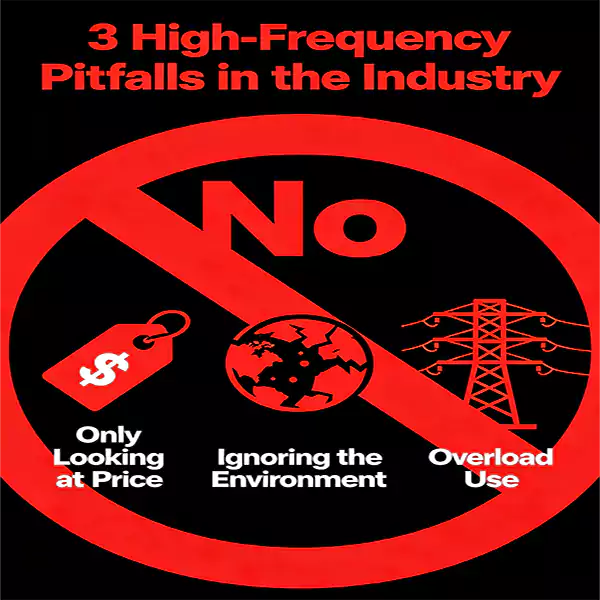
D: Most Common Engineering Pitfalls To Avoid
Pitfall 1: Prioritize low price over national industrial standards
Non-standard high-voltage cables fail to meet high voltage withstand requirements. They will directly result in unqualified project acceptance.
Pitfall 2: Ignore actual laying environments
Without anti-corrosion and waterproof jackets for humid, saline-alkali and outdoor environments, cables will suffer from water seepage, aging and electric leakage risks in short term.
Pitfall 3: Long-term overloaded operation
Unmatched current-carrying capacity will cause continuous overheating, accelerate cable aging and bring hidden dangers to the whole power distribution system.
E: Core Advantages of Qualified Standard High-Voltage Cables
Full standard conductor size & accurate cable length, qualified for all factory voltage withstand tests
– Uniform insulation layer without impurities or bubbles, stable anti-breakdown performance
– Stable conductive performance with low power transmission loss
– Excellent high & low temperature resistance and anti-aging performance for long-term outdoor operation
– Fully compliant with industry standards, passing acceptance of municipal power projects, factory renovation and substation construction
F: Industry Insight From MINGKONG
High-voltage cables act as the core vascular of the entire power distribution system.
Never compromise cable quality for lower project costs in power engineering. Reasonable cable specification matching and strict quality inspection can avoid rework, safety accidents and unnecessary economic losses fundamentally.
MINGKONG | Professional Power Automation & Power Distribution Solution Provider
G: Practical Cable Selection by Laying Scenarios
To ensure long-term performance and safety, it is critical to match the cable design to your actual installation environment:
- Indoor Tray/Cable Tray Installation: Use standard PVC-sheathed XLPE cables. These offer sufficient abrasion resistance for clean, dry indoor conditions while keeping costs efficient.
- Direct Burial Underground: Choose steel-tape armored (STA) cables with HDPE outer jackets. The armor provides protection against mechanical stress, soil corrosion, and potential rodent damage.
- Outdoor/Overhead Installation: Select UV-stabilized PE-sheathed cables. The UV-resistant formulation prevents jacket degradation from prolonged sunlight exposure and weathering.
- Corrosive or Humid Environments: Opt for cables with enhanced anti-corrosive PE sheaths, ideal for chemical plants, coastal areas, or high-moisture locations to prevent water ingress and premature aging.
H: Related Resources from Mingkong Electric
[Box Substation Series: Compact & Reliable Power Distribution Solutions]